
Why Doing Hard Things Can Make Us More Optimistic
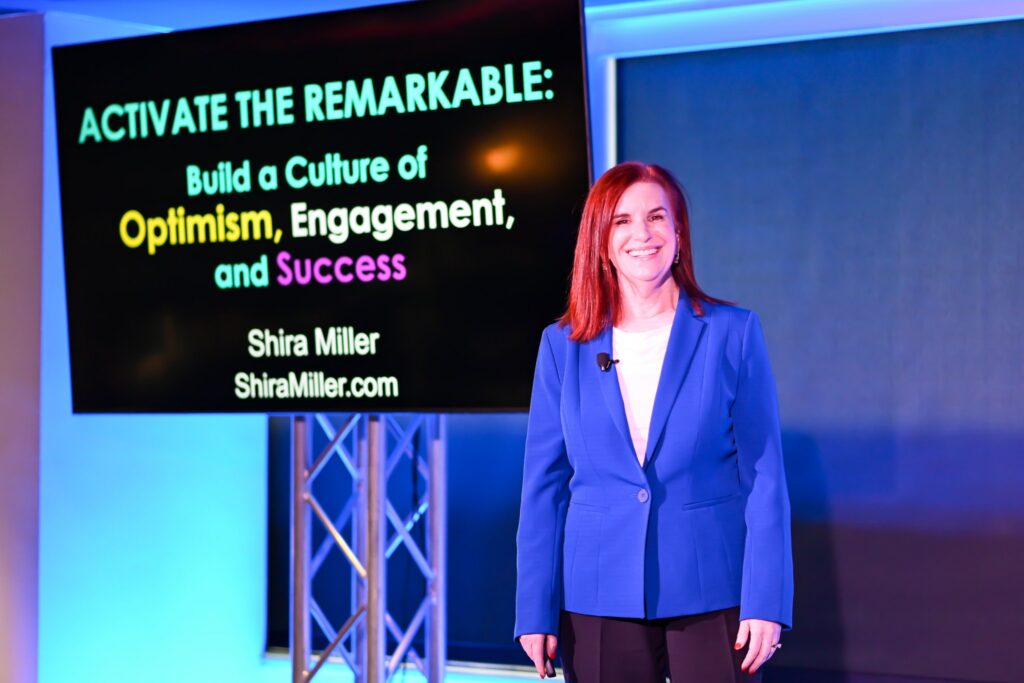
I was catching up with a longtime friend recently, filling her in on everything going on in my life, when I realized something that surprised me.
Some of the hardest things I have ever chosen to do have happened in the past five years. In my fifties.
Not because life suddenly handed me a series of unavoidable crises. I mean the things I chose to pursue because I believed I was capable of more.
And they have been hard.
There have been setbacks. Sacrifices. Very early mornings. Plenty of weekends spent working. Moments when self-doubt came roaring back and made me wonder what the heck I was thinking.
And looking back, I’ve realized something else:
Doing hard things has made me more optimistic.
Not the rose-colored-glasses kind of optimism where you pretend everything is wonderful.
Something much more powerful.
I think of it as earned optimism.
Sometimes You Have to Prove Something to Yourself
Writing my book, Free and Clear: Get Unstuck and Live the Life You Want(opens in new tab), was one of those hard things.
I started writing it before the pandemic and interviewed more than 100 people for the project. Then the world changed, and the book had to change with it.
More than once.
When I finally began working with my publisher in April 2021, I had to face a difficult truth: most of the book needed to be rewritten.
And I had about six months to do it while continuing to manage a demanding full-time corporate career.
So, I buckled down.
There were countless early mornings and weekends spent writing and rewriting. And I definitely wasn’t particularly fun to be around during some of it. Just ask my husband.
But in the summer of 2022, Free and Clear came into the world.
Of course, I was grateful for the positive reviews. But what meant even more were the messages I started receiving from readers and listeners who told me the book had helped them make a change, believe in themselves or get unstuck.
Doing something that hard had mattered.
And it gave me evidence that I could do another hard thing.
Behind the scenes recording my keynote: Activate the Remarkable™
Then I Decided to Raise the Bar Again
I’ve been speaking professionally for years. I delivered two TEDx talks, served as a Guest Expert Speaker at Canyon Ranch resorts and appeared on stages around the country.
But I knew I was capable of more.
I wanted to build a significant professional keynote speaking business while continuing in my current C-suite corporate role that still brings me fulfillment.
Turns out, that’s hard too.
It has required me to check my ego at the door and adopt a learner’s mindset.
I’ve learned that being a “good speaker” isn’t the goal. The real question is: Are you providing meaningful value to the people in the room?
So, I’ve worked intently to develop my Activate the Remarkable™ platform, focused on helping leaders bring out the remarkable in every member of their teams in a world that never stops.
I’ve sought feedback from people much smarter than me like Eric Termuende and Ivy Gustafson. I continue to work with coaches like Ginger Schlanger who challenge my thinking, content and delivery. I customize every keynote to the needs of the organization and the people sitting in front of me because I want it to be as meaningful and actionable as possible for them.
And yes, self-doubt showed up here too. With all sorts of “fun” thoughts like:
Am I too old to take on something this big?
Can I really build this while working a full-time corporate job?
Am I good enough?
Will my message matter?
Over the past year, I’ve had the privilege of delivering keynotes for organizations across the restaurant, hospitality, franchising, financial services, retail, media and entertainment and technology sectors.
And every one of those experiences has given me another piece of evidence:
Yes, this is possible.
Not guaranteed or easy. But possible.
And that’s where optimism gets interesting.
Optimism Is Not Pretending Everything Will Work Out
In my Activate the Remarkable(opens in new tab) keynote(opens in new tab), I talk about optimism as the fuel that activates the remarkable.
That’s because optimistic people see obstacles as temporary setbacks. They persevere because they believe better outcomes are possible moving forward.
Psychologist Albert Bandura’s groundbreaking work on self-efficacy, our belief in our ability to influence outcomes, found that one of the most powerful ways to develop that belief is through what he called mastery experiences.
In other words, we build belief in ourselves by actually doing things that require us to stretch.
There is fascinating research on resilience, too. Psychologist Mark Seery and his colleagues found that people who had experienced some adversity demonstrated better well-being and greater resilience to subsequent stressful events than people who had experienced either very high levels of adversity or none at all.
That’s an important distinction.
Because I don’t believe we need to glorify suffering. Trauma isn’t a leadership development strategy, and my heart goes out to those who have built their careers around it.
But manageable challenge can teach us something about ourselves.
Every time we struggle with something difficult, keep going and eventually find our way through it, we build a body of evidence.
That you can and have figured that out. You recovered from that setback. You learned something you didn’t know before and accomplished something you didn’t know you could do.
That’s earned optimism.
And we could use more of it right now.
Gallup reported in February 2026 that the percentage of American adults anticipating a high-quality life five years into the future fell to 59.2% in 2025, the lowest level since they began measuring it nearly two decades ago.(opens in new tab)
When the future feels uncertain, it can be tempting to wait until we feel more confident, more certain or more optimistic before taking action.
But perhaps we’ve got the sequence backward.
Sometimes action creates optimism.
So how can we intentionally build more of it? Here are three things you can try now!
1. Do One Thing That Proves What’s Possible
Think about something you’ve been telling yourself you would like to do “someday.”
Maybe it’s raising your hand for a bigger assignment. Starting a business or side-hustle. Going back to school. Having a difficult conversation. Submitting the proposal or writing the first chapter after eight months of looking at a blank screen.
You don’t have to know exactly how the whole thing will work out. Just take that next meaningful step – small or large – and move forward. And every time you expand your definition of what’s possible for yourself, you make it a little easier to believe in the next possibility.
2. Keep Track of the Hard Things You’ve Already Done
When something feels overwhelming, our brains have a funny way of acting as if we have never dealt with difficulty before.
But you have. Think about the past five years in your professional and personal life. There have been enormous changes in the way we work. Economic uncertainty and technology disruptions. Relationships with your family members, friends and with yourself have evolved, and not always with ease.
You’re still here.
So, when self-doubt starts whispering, I don’t know if I can do this, deliberately remind yourself of the evidence. Ask yourself – What is something I once wasn’t sure I could handle that I eventually figured out? Then that answer, whatever it might be, becomes your proof.
Not that this next thing will be easy. But that you have resilience, intelligence, experience and resourcefulness you can draw upon.
3. Amplify Progress, Not Just the Finish Line
One of the concepts I teach is to amplify what’s possible.
For years, people believed running a mile in under four minutes couldn’t be done. Then Roger Bannister broke the barrier in 1954. Once he proved it was possible, other runners soon followed.
That’s what possibility does. When we see evidence that something can be done, it expands what we believe might be possible for us, too.
The same is true with our own progress.
Don’t wait until you’ve written the book, landed the dream job or crossed the giant finish line to acknowledge how far you’ve come.
Notice the difficult conversation you finally had. The rejection you bounced back from. The new skill you’re developing. The day you showed up even when you weren’t feeling confident.
Those smaller wins matter because they become evidence.
Every bit of progress gives you another reason to believe: I can do hard things. And I can keep going.
What Hard Thing Might Be Building Your Optimism Right Now?
Looking back on the past five years, I don’t wish that everything had been easier.
Because those experiences taught me something I couldn’t have learned by staying comfortable.
I know I can do hard things. I can get knocked down, question myself, adjust and keep moving.
And knowing those things makes me genuinely optimistic about what comes next.
That’s what authentic optimism means to me. It’s not believing the road ahead will always be smooth.
It’s knowing that when the road gets hard, you have what it takes to keep going.
Maybe the hard thing you’re facing right now isn’t evidence that you’re on the wrong path. Maybe it’s helping you discover just how much is possible.
What’s one hard thing you’ve done that made you believe more strongly in yourself?