
Authentic Optimism: Why Believing First Changes Everything at Work

One of the core steps in my Activate the Remarkable framework is sparking optimism at work.
I’m talking about authentic optimism — the belief that when challenges inevitably arise, you can overcome them, and that a better future is always possible.
That belief matters more than we often realize.
Authentic optimism builds resilience. It helps people bounce back when plans change, systems fail, or pressure spikes. It fuels hope, connection, and purpose — and it’s often the difference between teams that give up and those that innovate under pressure.
And yes, you’ve probably guessed by now that I’m an optimistic person. But let’s pause here to be clear about what that means.
Authentic optimism is not rose-colored glasses. It’s not rainbows and unicorns. And it’s not toxic positivity that ignores reality.
Authentic optimism is grounded.
It’s believing you can do hard things — because you already have. Over the past few years. Over decades. In some cases, over a lifetime.
It’s knowing that even when you fall down, you have the resilience, intelligence, and capability to stand back up and figure it out. Because you do.
That mindset creates a real competitive advantage at work. It helps individuals — and entire organizations — move to the next level.
And here’s the good news: you don’t have to be naturally optimistic to build it.
That’s why I shared a previous newsletter article about cognitive reframing, a practical way to train your brain to focus more on what’s going right (without ignoring what’s hard). If you haven’t read it yet, here is the link — it’s a powerful starting point.
As leaders, our optimism matters even more — because we model the mindset others adopt.
That might look like writing down one good thing you did or observed each day. Or reframing your inner critic — that little voice that talks trash to you — by extending yourself the same grace and gratitude you offer your team.
That’s how optimism grows. That’s how it becomes contagious. And that’s how it sets the tone for everyone around you.
Just ask Breanna Coleman.
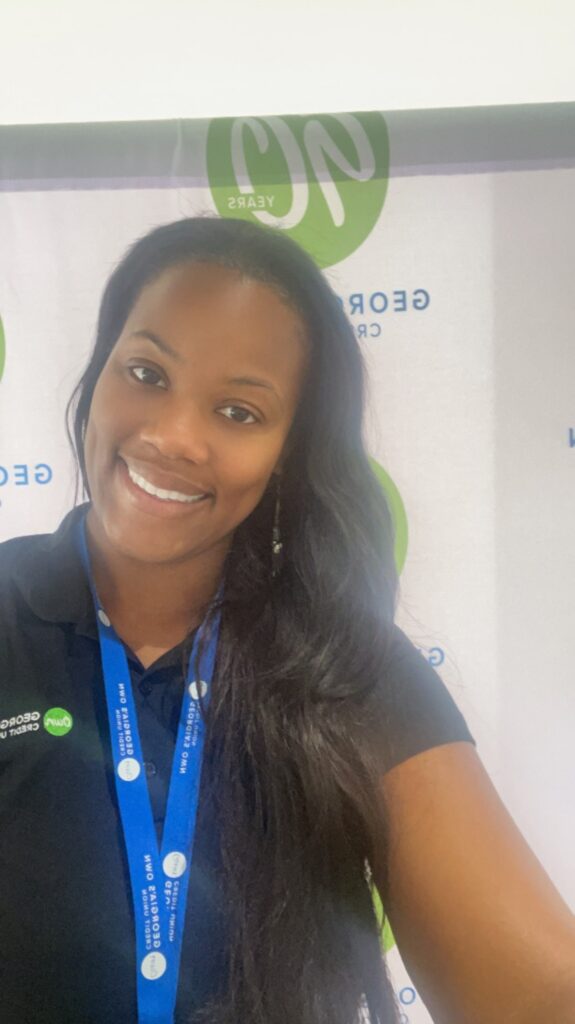
Breanna is the Special Services Manager – Member Services at Georgia’s Own Credit Union and has been with the organization for nearly 13 years. When you’ve spent that long in a contact center environment — supporting nearly 50 teammates, balancing metrics, member needs, new systems, and constant change — you learn something fast:
Optimism isn’t optional. It’s essential.
Breanna manages the contact center, coaches team leads, supports onboarding, and jumps in when it’s all hands-on deck. She’s also been trusted to lead some of the organization’s most critical initiatives.
In 2025, when Georgia’s Own rolled out a brand-new telephony system, Breanna didn’t wait to be asked. She volunteered to test it first.
Her mindset? “I need to break it before my team does.”
She spent hours inside the system — identifying what worked, what didn’t — and then created hands-on learning labs so her team could practice, build confidence, and walk into launch day ready.
Tight timeline. High pressure. Real stakes.
And it worked — because optimism showed up as preparation, ownership, and belief that success was possible.
But here’s what truly defines Breanna.
Years earlier, in a meeting she didn’t expect, she was called forward and recognized as the most knowledgeable person in the contact center. She was stunned. She’s someone who pours into others, not herself.
That moment shifted something.
She realized: When people see you, it builds confidence. And confident leaders create optimistic teams.
Today, her team hears one phrase constantly:
“Don’t say ‘I can’t.’ Let’s talk about how we can.”
When a team lead once said they couldn’t meet an urgent deadline, Breanna didn’t apply pressure. She offered partnership.
“What do you need from me?”
She stepped in. Shared the load. And together, they delivered. That moment reshaped what the team believed was possible.
Breanna starts every day grateful — not for ease, but for opportunity.
Because authentic optimism doesn’t ignore reality. It activates it.
And when leaders believe first — when they model what’s possible — remarkable things follow.
I’d love to hear from you: Where have you seen authentic optimism change a team, a leader, or even your own mindset at work? Drop a comment below — your story might be exactly what someone else needs to read today.